Smart Toaster Module Converted from 3D Print to Sheet Metal
A computer-vision toasting module taken from printed prototype to a manufacturable sheet metal design — camera and LED apertures, glass, insulation and active cooling resolved together.
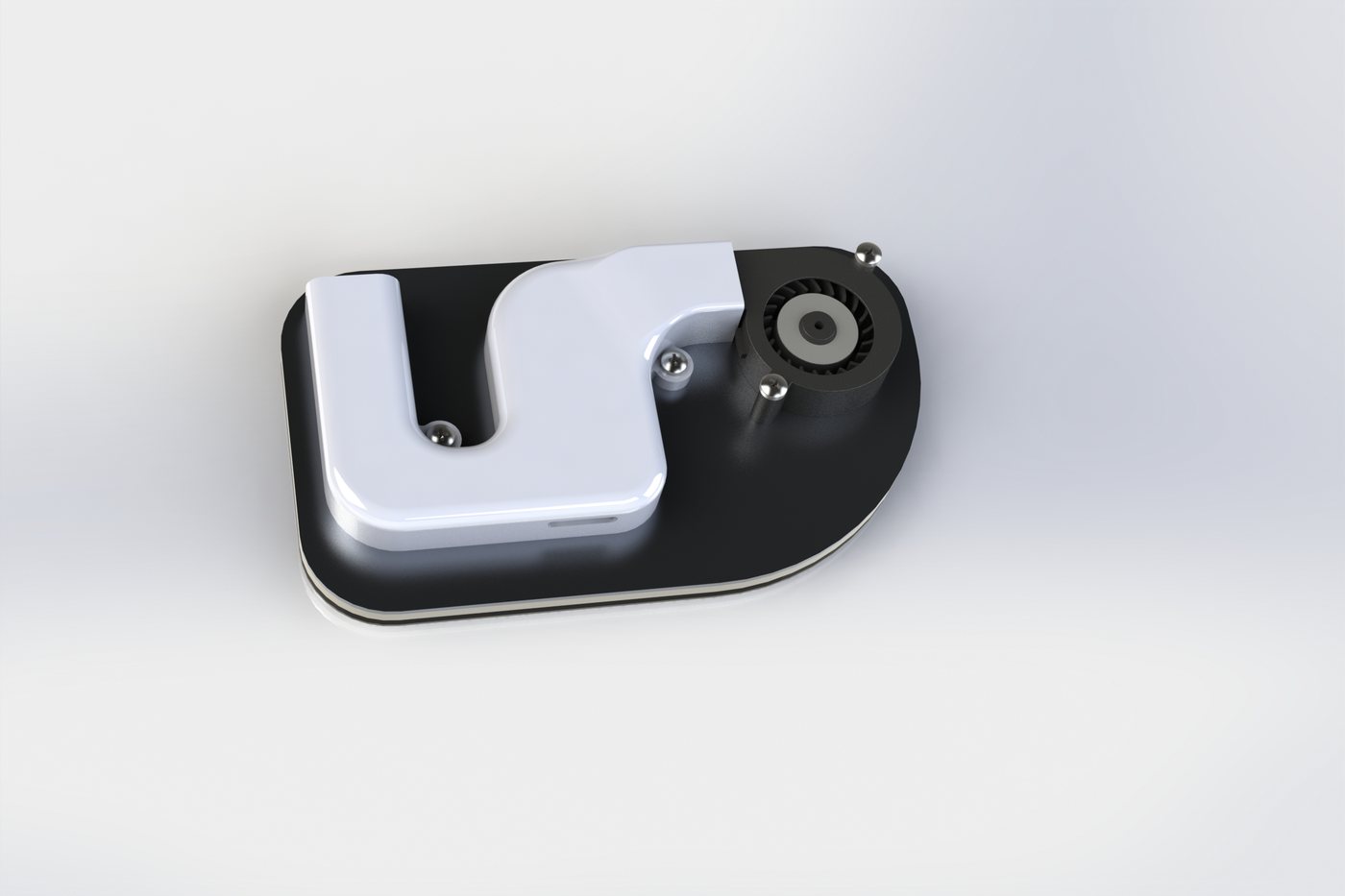
A team had a working smart toaster prototype: a camera watching the bread, LEDs lighting it, a fan keeping the electronics alive. It was 3D printed, and 3D printed parts do not belong inside a toaster.
The problem
Moving the module to sheet metal changed every assumption:
- Heat. The module sits on an appliance whose entire purpose is to get hot. Electronics needed a thermal barrier, and the barrier needed to not block the camera.
- Optics through a hot wall. Camera and LED apertures had to be cut into the plate for visibility into the toasting chamber, then closed with glass and insulated — without losing the view.
- Mounting that a factory can make. Camera, ESP32 and LED strip all needed fixing methods that survive contact with a production line, not printed clips.
- Attachment to the appliance. The module had to fasten to an existing toaster body that was never designed to receive it.
The approach
- Redraw for the process, not the printer. Bends, flanges and cut-outs laid out for sheet metal from the start — flat pattern in mind, no geometry that only additive manufacturing can produce.
- Aperture stack. Camera and LED openings sized around the glass and the insulation that had to sit in them, so the optical path survived the thermal requirement.
- Fastening strategy agreed up front. Assembly holes for self-tapping screws into the toaster body, chosen with the client before the model was finished rather than discovered at assembly.
- Documentation as a deliverable. Fabrication drawings plus a written memo, because the client needed to hand the package to a manufacturer and to investors.
The result
A manufacturable sheet metal module with thermal management, mounted optics and a complete fabrication drawing set — ready for the next round of physical testing.
Where this applies
Every hardware startup hits this wall: the printed prototype works and cannot be made. The conversion is real engineering — process constraints, thermal reality and assembly method, all at once.
I take prototypes to manufacturable designs — sheet metal, moulded parts and the drawings that go to the shop. Request a quote or see all services.