Ventilated Access Cover Redesigned to BS EN 124-3
A temporary ventilated duct lid re-engineered for load class compliance, anti-slip surface and identification marking — with drawings a fabricator could work from directly.
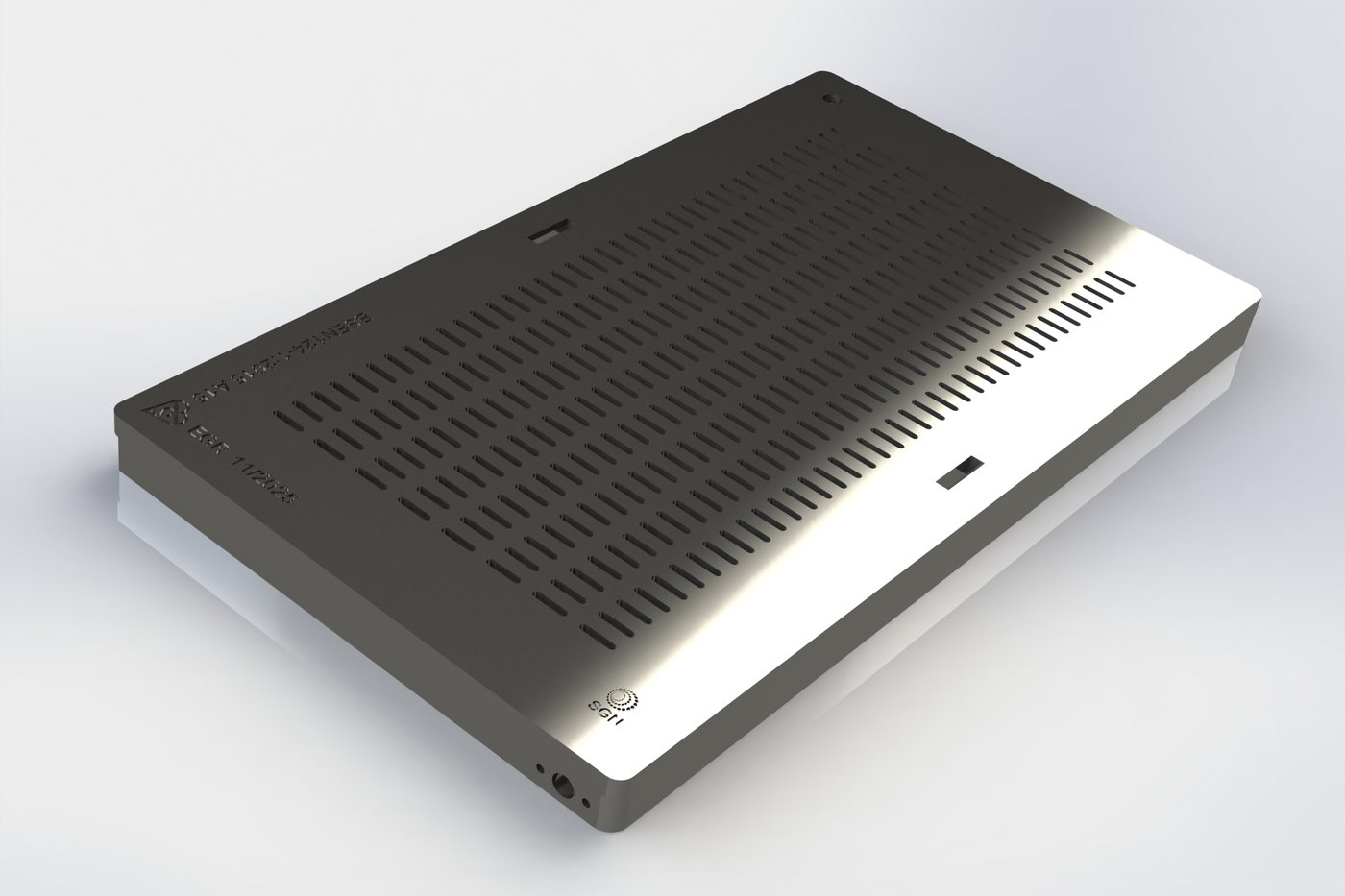
A UK works contractor used a ventilated lid in place of a conventional duct cover during site works. It functioned — but it was not built against the standard that governs it.
The problem
BS EN 124-3 covers gully tops and manhole tops in steel and aluminium alloys, and it is not optional on a public works site. The existing lid fell short on three counts:
- Securing. Below a certain mass, a cover has to be positively secured — it cannot rely on its own weight to stay put.
- Identification marking. The standard requires the cover to carry its own identification.
- Slip resistance. A defined slip-resistant surface is mandatory, not a finish choice.
There was a practical constraint too: the client works in AutoCAD, not SolidWorks. Deliverables had to be usable on their side without a licence they did not own.
The approach
- Load path first. The lid was originally modelled in mild steel; material and section were revisited against the load class the site actually needs, keeping the option open to other alloys that carry the same load.
- Ventilation without weakening. The vent pattern was laid out to keep open area high while leaving the structural ribs continuous — the perforation follows the stress, not the other way round.
- Compliance designed in, not bolted on. Securing features, the cast/stamped identification area and the slip-resistant surface were treated as design inputs from the first sketch.
- Neutral deliverables. Drawings and exchange formats the client’s own AutoCAD workflow and their fabricator could both open.
The result
A prototype-ready design and drawing package for a compliant ventilated access cover, produced through three iterations with the contractor’s site experience feeding each one.
Where this applies
Any product that has to satisfy a published standard as well as a customer. The engineering is in reading the standard as a set of design inputs early — retrofitting compliance onto a finished design is always the expensive route.
I design sheet metal and fabricated hardware to standard, and produce the drawing package the shop builds from. Request a quote or see all services.